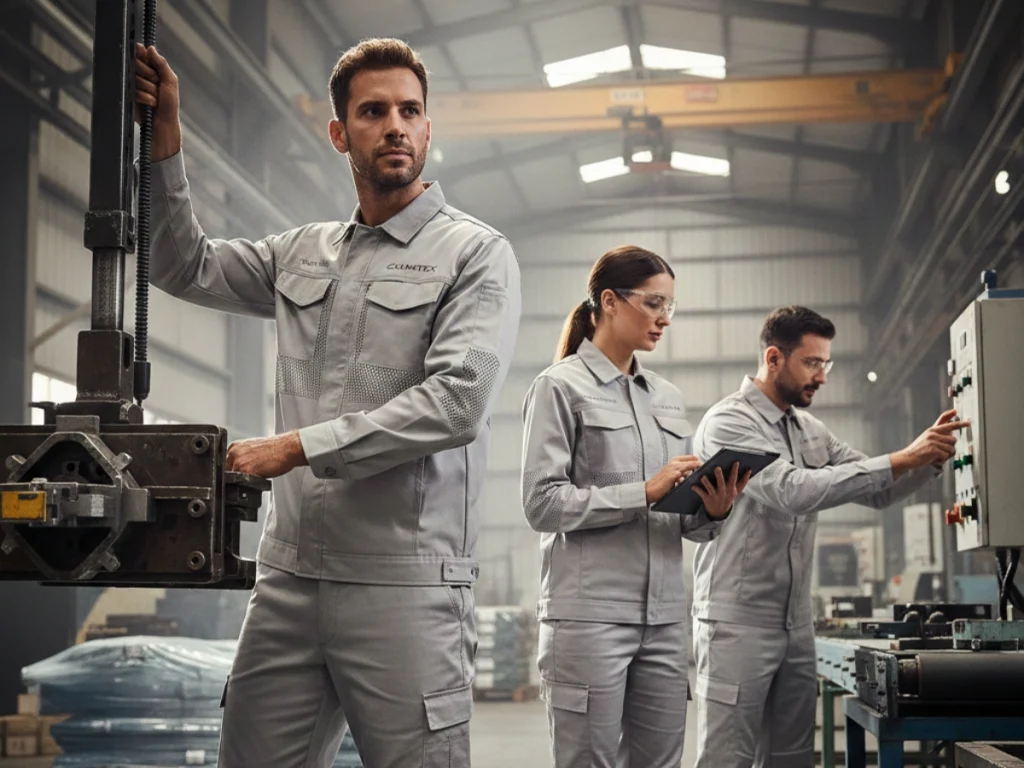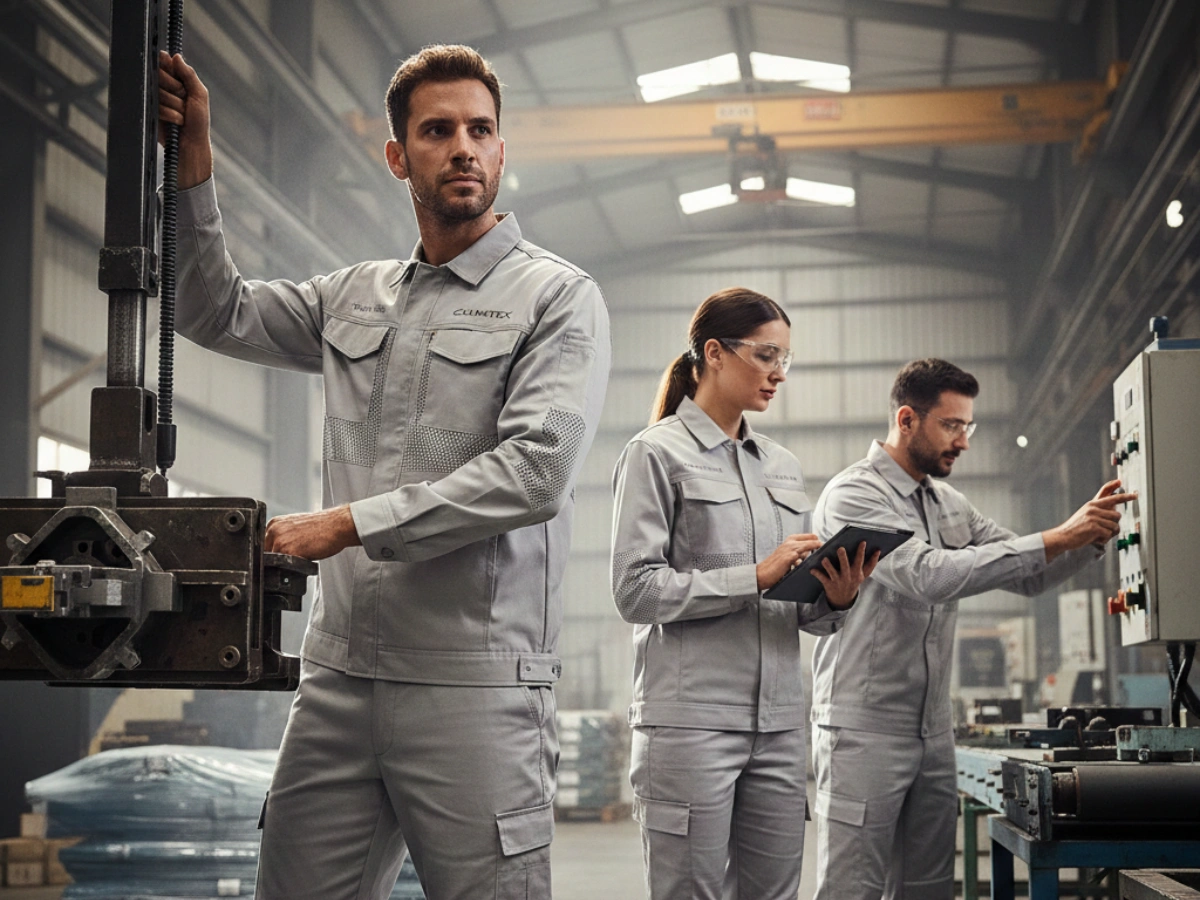
Cooling Uniforms UAE are essential for anyone working outdoors or in non-air-conditioned environments in the UAE, where summer is not just hot, it is relentless.
Temperatures regularly cross 45°C, humidity spikes without warning, and even short exposure can lead to fatigue, dehydration, and reduced performance.
This reality has pushed uniform design far beyond basic fabric choices. Welcome to Thermal Comfort 2.0, where science, material engineering, and real-world working conditions come together to redefine what workwear can do.
Understanding Thermal Comfort in Extreme Heat
Thermal Comfort is not simply about “feeling cool.” From a scientific perspective, it is the state in which the human body maintains a stable core temperature without excessive strain. In hot climates like the UAE, this balance is constantly under threat.
The body relies on sweat evaporation and heat dissipation to cool itself, but high humidity and dense fabrics can block this natural process.
Modern uniform design focuses on supporting the body’s thermoregulation rather than fighting it. This means controlling heat transfer, managing moisture efficiently, and allowing continuous airflow. When done right,
Thermal Comfort directly improves concentration, endurance, and overall workplace safety.
Why Traditional Uniforms Fall Short
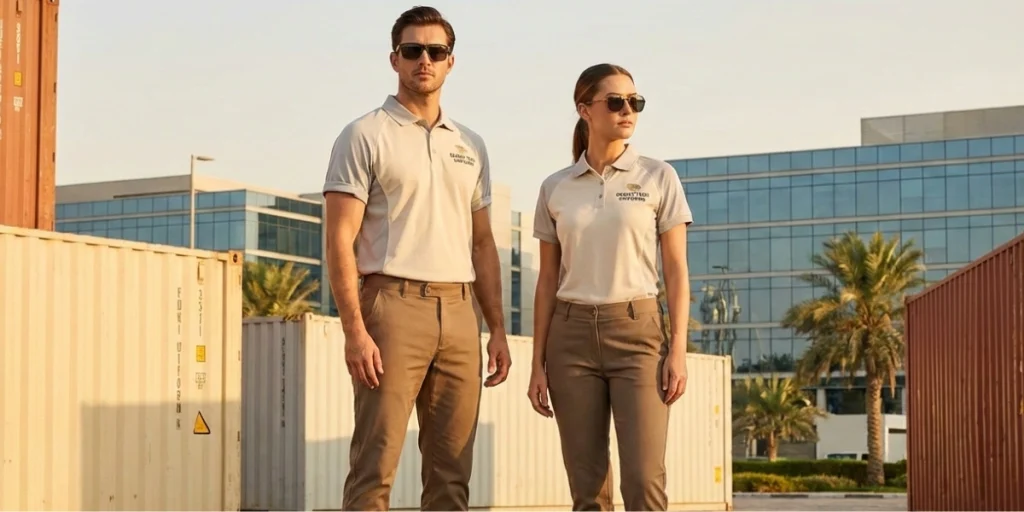
Conventional uniforms were often designed with durability and appearance as the main priorities. While those factors still matter, they are no longer enough.
Heavy cotton blends, thick stitching, and poor ventilation trap heat and moisture. In UAE summers, this can lead to discomfort within minutes and serious health risks over longer shifts.
Industries such as construction, logistics, hospitality, aviation ground services, and manufacturing have felt this impact most strongly.
As a result, demand for Cooling Uniforms UAE has surged, driven by both employee welfare and stricter health and safety standards.
The Role of Advanced Fabric Technology
High-performance uniforms start at the fibre level. Fabric engineers now focus on how materials behave under heat stress, not just how they look on day one.
Phase Change Material (PCM) fabrics are one of the most significant breakthroughs in this space. PCM works by absorbing excess body heat when temperatures rise and releasing it when the body cools down.
Think of it as a thermal buffer that smooths out temperature fluctuations during long working hours.
This technology, once reserved for aerospace and sportswear, is now being integrated into professional uniforms across the UAE.
Alongside PCM, mesh structures and engineered weaves allow air to circulate freely. This is especially important for Breathable workwear Dubai, where workers often move between outdoor heat and indoor environments.
Breathability ensures heat does not build up during physical activity and dissipates quickly during rest periods.
Moisture Management: More Than Just Sweat Control
Sweat itself is not the problem. Trapped moisture is. High-performance uniforms use capillary action to pull sweat away from the skin and spread it across the fabric surface, where it can evaporate quickly.
This is the foundation of Moisture-wicking uniforms Sharjah, which are increasingly popular in industrial zones and service sectors.
Effective moisture management reduces skin irritation, prevents bacterial growth, and helps workers stay dry even during peak heat hours.
Over a full shift, this translates into better focus, fewer breaks caused by discomfort, and improved morale.
Heat Resistance and UV Protection
In cities like Abu Dhabi, where direct sun exposure is often unavoidable, uniforms must do more than breathe. They must actively resist external heat.
Heat-resistant uniforms Abu Dhabi are designed with reflective finishes and tightly controlled fabric density that limits radiant heat absorption without compromising airflow.
Many of these uniforms also include built-in UV protection, shielding workers from harmful rays that can cause long-term skin damage.
This is particularly relevant for outdoor roles such as road maintenance, oil and gas operations, and security services.
Sustainability Meets Performance
Performance no longer has to come at the expense of environmental responsibility. In fact, the two now go hand in hand.
Sustainable industrial workwear UAE focuses on recycled fibres, low-impact dyes, and longer garment life cycles.
Advanced fabrics last longer, resist wear and tear, and require fewer replacements, reducing overall waste.
Sustainable uniforms are also designed to perform consistently after repeated washing, a critical factor in high-temperature environments where hygiene standards demand frequent laundering. This durability supports both cost efficiency and environmental goals.
Design That Supports the Human Body
Thermal Comfort is not just about fabric. Garment construction plays a major role. Strategic ventilation zones, ergonomic cuts, and lightweight trims all contribute to how heat moves across the body.
Modern uniforms are designed using body-mapping techniques that place breathable panels in high-heat areas such as the back, underarms, and chest.
This attention to detail ensures that Cooling Uniforms UAE are not only functional but also practical for long shifts and physically demanding tasks.
The Business Case for High-Performance Uniforms
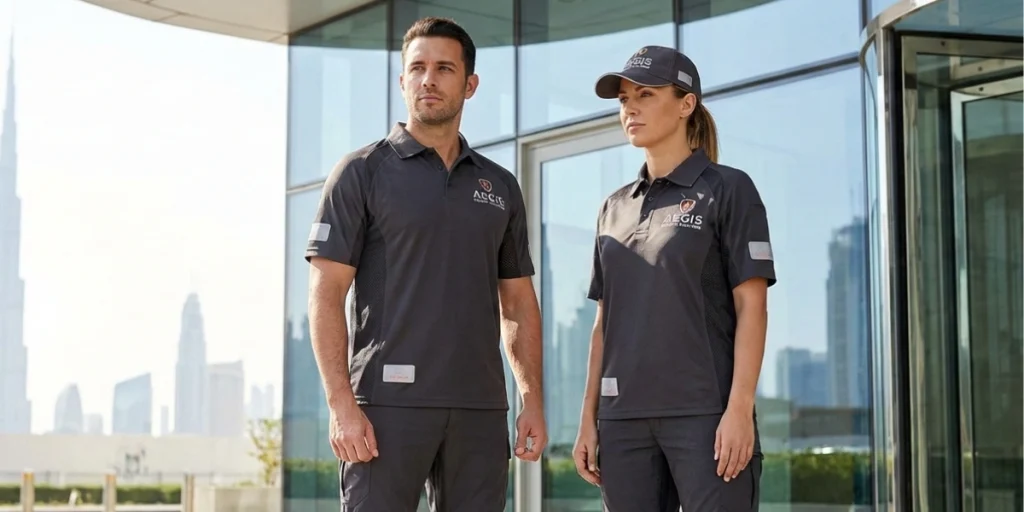
From a business perspective, investing in advanced uniforms is no longer a luxury. Heat stress leads to lower productivity, higher absenteeism, and increased risk of workplace incidents.
By prioritising Thermal Comfort, organisations can protect their teams while improving operational efficiency.
Employees who feel physically comfortable are more engaged, more alert, and less likely to experience heat-related health issues.
Over time, this reduces medical costs, staff turnover, and downtime caused by fatigue.
Looking Ahead: The Future of Thermal Comfort
As UAE summers grow more intense, the evolution of workwear will continue. Smart textiles, temperature-responsive fabrics, and data-driven garment design are already on the horizon.
What remains constant is the core goal: supporting the human body in extreme conditions.
Thermal Comfort is no longer a buzzword. It is a measurable, science-backed requirement for anyone working in the UAE heat.
With innovations like Phase Change Material (PCM) fabrics, breathable construction, moisture control, and sustainable sourcing, high-performance uniforms are setting a new standard for safety and comfort.
In the end, the best uniform is one that workers forget they are wearing. When heat fades into the background and performance takes centre stage, Thermal Comfort 2.0 has done its job.